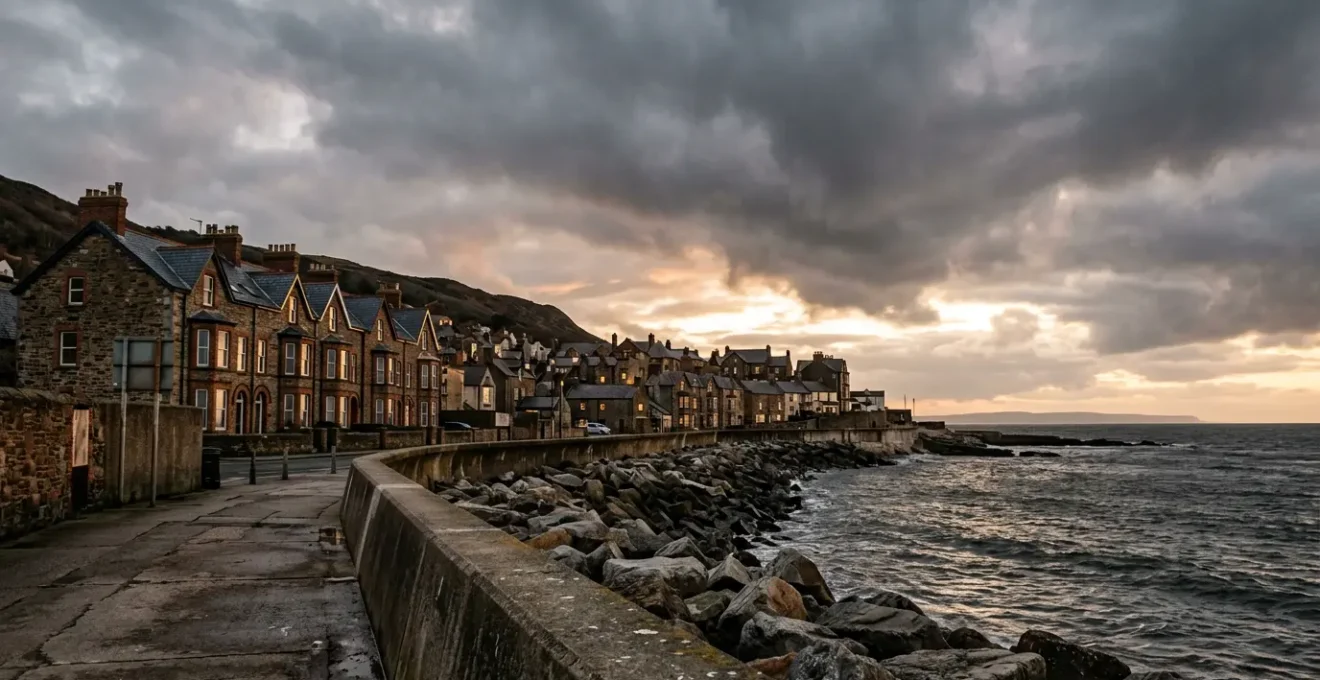
The survival of UK coastal communities depends on understanding and acting on a series of hidden financial and structural tipping points before they are breached.
- Your property’s insurability is not guaranteed and is directly tied to delayed national flood defence projects and the approaching end of the Flood Re scheme.
- Proactive, low-cost home modifications and a clear-eyed assessment of when to sell are more critical than waiting for large-scale government intervention.
Recommendation: Shift from a reactive mindset of defence to a proactive strategy of resilience, assessing your specific risk using the indicators in this guide today.
For residents of Britain’s beautiful but vulnerable coastlines, the threat of climate change often feels like a distant drumbeat. We hear the familiar warnings about rising sea levels and stronger storms, and we look to the horizon for the comfort of a sea wall. The conversation is dominated by large, expensive, and slow-moving government projects. But as a civil engineer who has spent a career designing and inspecting these very defences, I can tell you we are looking in the wrong direction.
The most immediate danger isn’t the single, catastrophic wave over the top of a defence. It’s a series of silent, invisible tipping points that can make a home uninsurable, a mortgage unobtainable, and a community economically unviable, long before the water is at the door. These are the thresholds where systemic failure begins—in insurance markets, in concrete foundations, and in the fabric of community life itself.
This isn’t another article about the problem; this is a field manual for the solution. We will move beyond the headlines to examine the specific, often counter-intuitive, decisions that residents and local planners must make. Forget waiting for a new sea wall. The key to resilience lies in understanding the hidden mechanics of risk, from flood-proofing a Victorian terrace on a budget to knowing the precise signals that indicate it’s time to divest before your property’s value evaporates. We will dissect the engineering, the finance, and the ecology of coastal adaptation to empower you to act with agency and foresight. This is community resilience engineering, from the ground up.
In this guide, we will explore the critical questions that every coastal resident and council planner should be asking right now. The following sections break down the essential components of a resilient strategy, from personal finance to high-tech ecosystem management.
Summary: A Practical Guide to Coastal Resilience Tipping Points
- Why Your Home Insurance Might Be Void Within 5 Years?
- How to Flood-Proof a Victorian Terrace House for Under £2,000?
- Managed Retreat vs Sea Walls: Which Saves More Community Value?
- The Zoning Mistake That Puts New Developments Underwater
- When to Sell a Coastal Property Before Value Plummets?
- The Salt Air Mistake That Corrodes Coastal Structures from the Inside
- How to Accelerate Peatland Recovery Using Local Genetic Strains?
- How to Monitor Ecosystem Dynamics in British National Parks?
Why Your Home Insurance Might Be Void Within 5 Years?
The single most important financial backstop for any coastal property owner is insurance. Yet, the assumption that it will always be available and affordable is a dangerous one. A perfect storm of policy deadlines and project delays is creating an insurance “cliff edge” that many homeowners are unaware of. The government-backed Flood Re scheme, which has kept insurance accessible for high-risk homes, is not permanent. It is legislated to end in 2039, a date that is rapidly approaching in the world of 25-year mortgages. The scheme’s success was predicated on the government building robust new flood defences in the interim. This is not happening fast enough.
In January 2024, a House of Commons committee reported that the government’s £5.2 billion flood defence programme is a staggering 40% behind schedule. It is now expected to protect only 200,000 properties by 2027, a far cry from the original 336,000 target. This delay directly undermines the transition plan for Flood Re, increasing the likelihood that when the scheme ends, private insurers will deem many coastal postcodes too risky to cover at any price. The risk isn’t just theoretical; it’s a quantifiable future liability.
The potential consequences are stark. Research from Loughborough University warns that if adaptation targets aren’t met, as many as 3 million UK homes could become effectively worthless within 30 years simply because they are uninsurable. As their report states:
If the government fails to meet its climate adaptation targets, as many as 3 million UK homes could become effectively worthless within 30 years.
– Research from Loughborough University, PreventionWeb UK Climate Insurance Crisis Report
This isn’t a distant problem. As the 2039 deadline for the Flood Re transition plan gets closer, mortgage lenders will adjust their risk models. A property that cannot be insured for the life of a mortgage is an unacceptable risk, effectively removing it from the open market. This is a financial tipping point that could be reached well within the next decade for the most exposed communities.
How to Flood-Proof a Victorian Terrace House for Under £2,000?
While the national picture can seem daunting, individual homeowners have significant power to build resilience from the ground up. The idea that flood-proofing is prohibitively expensive is a myth. For a typical Victorian terrace, a strategic investment of less than £2,000 can dramatically reduce both the damage from a flood and the time it takes to recover. This is about engineering for resilience, not just resistance. The goal is to make your home capable of recovering quickly, minimising disruption to your life.
The key is to focus on a few high-impact, low-cost interventions. Forget trying to build a fortress; instead, think about managing water ingress and protecting critical systems. Simple, effective measures include fitting automatic airbrick covers to block a primary entry point for water and installing non-return valves on sewage pipes to prevent contaminated backflow—a common and distressing feature of flooding. Raising electrical sockets to a height of 1.5 metres is a crucial step to protect your home’s infrastructure and ensure power can be restored safely and quickly after an event.
For the building fabric itself, especially in older homes with solid brick walls, modern impermeable materials are often the wrong choice. They can trap moisture, leading to long-term damp and decay. A much better approach is to use sacrificial, breathable materials like traditional waterproof lime plaster. This allows the walls to breathe and dry out naturally after a flood, and if damaged, it is relatively simple and cheap to replace the affected plaster without structural intervention.
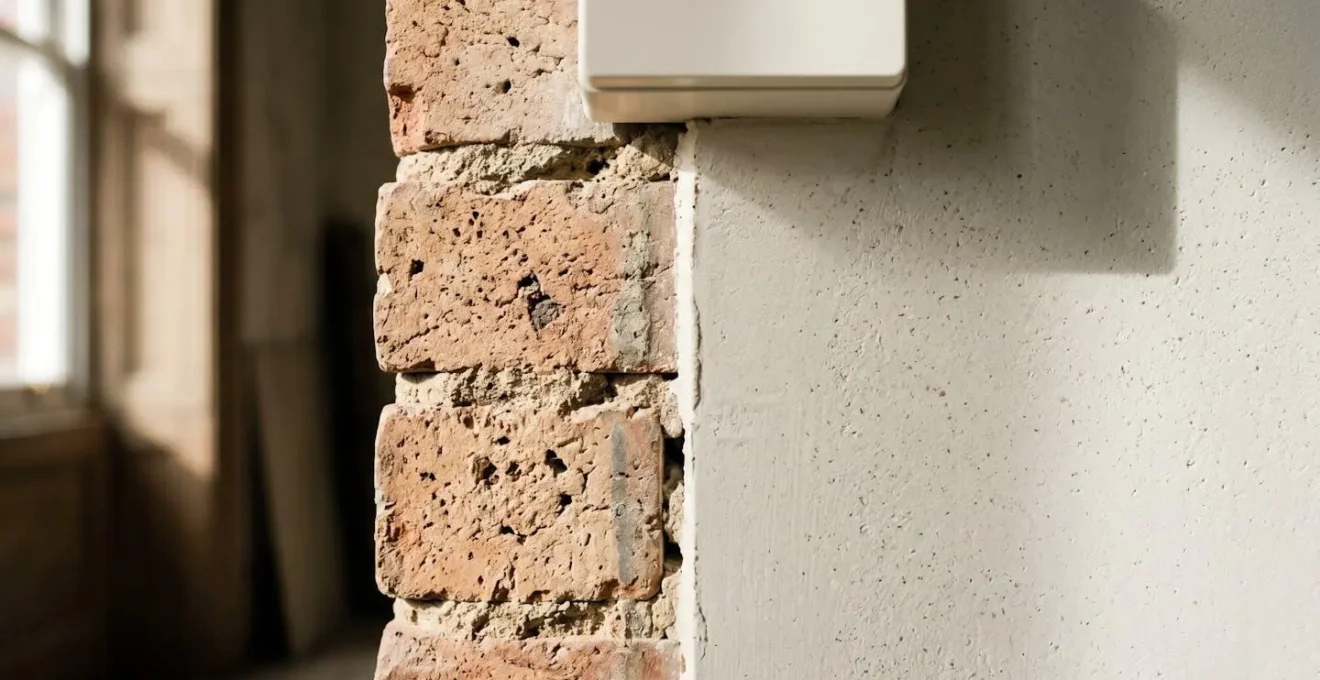
As the image shows, the focus is on practical modifications that integrate with the character of the home while providing robust protection. A targeted approach prioritises the most vulnerable points of your property. Below is a realistic budget breakdown for achieving significant resilience:
- Automatic airbrick covers: £150-£200 (essential for preventing water ingress through ventilation)
- Non-return valves for sewage pipes: £200-£400 (prevents contaminated backflow)
- Raising electrical sockets to 1.5m height: £400-£800 (protects crucial infrastructure)
- Flood-resistant door seals and barriers: £300-£500 (first line of defence)
- Waterproof lime plaster for ground floor walls: £300-£600 (sacrificial breathable material suitable for Victorian brickwork)
Managed Retreat vs Sea Walls: Which Saves More Community Value?
For decades, the default response to coastal erosion has been to “hold the line” with concrete sea walls. This approach, however, is becoming financially and environmentally unsustainable. This forces a difficult conversation about a strategy known as “managed retreat” or, more accurately, managed realignment. This involves strategically allowing the coastline to change, often by relocating homes and creating new intertidal habitats that act as natural buffers. While emotionally and politically charged, it is a debate we cannot afford to ignore.
The case of Fairbourne in North Wales provides a stark, real-world example of the complexities involved. In 2014, with the cost of maintaining and upgrading sea defences deemed unsustainable, Gwynedd Council designated the village of 500 properties for managed retreat and decommissioning by 2054. This decision, while based on long-term risk assessment, had immediate and devastating social and economic consequences. Property values plummeted by as much as 40%, and the community has been gripped by what is now recognised as ‘climate grief’ and profound anxiety about the future.
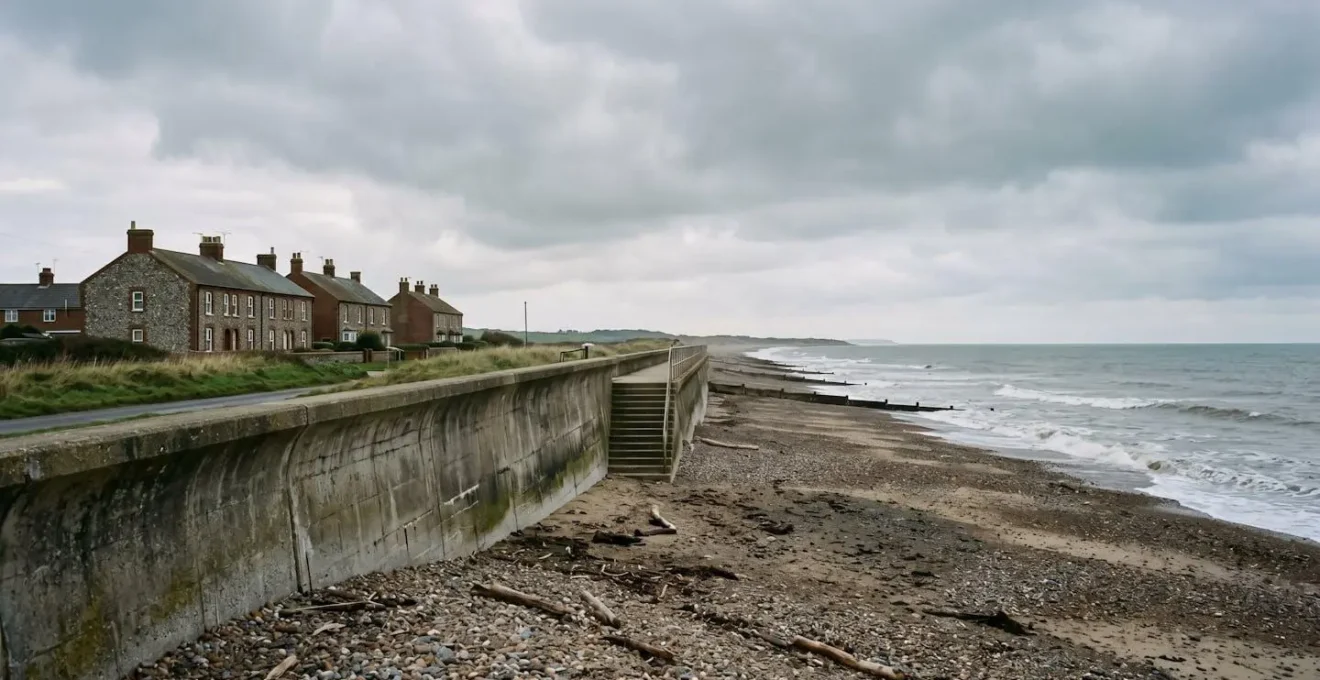
The Fairbourne case highlights the central conflict: the immense, long-term cost of hard defences versus the immediate, tangible loss of community value. The council’s decision was partly driven by cost. Maintaining and upgrading Fairbourne’s defences to a level that would provide protection against future sea level rise would cost, according to Gwynedd Council estimates, between £115-120 million. This is a sum that is simply not viable for a small community.
However, “community value” is more than just property prices. It encompasses social networks, heritage, and a sense of place. The blunt instrument of a long-term decommissioning plan, as seen in Fairbourne, can shatter this value overnight. The challenge for planners is to develop more nuanced approaches to managed realignment—phased buy-outs, community-led relocations, and investment in creating new, resilient settlements. The debate is no longer *if* some communities will need to relocate, but *how* we do it in a way that preserves dignity and as much community value as possible.
The Zoning Mistake That Puts New Developments Underwater
One of the most profound failures in our approach to coastal risk is a systemic one: we continue to build new homes in harm’s way. Despite clear and present evidence of rising flood risk, planning and zoning regulations have been too slow to adapt, permitting development on floodplains and in areas of known future vulnerability. This isn’t a legacy issue; it’s happening right now, creating future victims and locking in enormous future costs for an entire generation.
The numbers are alarming. A 2026 analysis from the insurer Aviva revealed that a shocking 11% (one in nine) of new homes built between 2022 and 2024 were constructed in flood-risk zones. This is a fundamental mistake that prioritises short-term housing targets over the long-term safety and financial security of residents. These are not just houses; they are communities being knowingly placed in a precarious position, often without the buyers fully understanding the long-term implications for insurance, property value, and personal safety.
The problem is set to worsen as the impacts of climate change accelerate. As Jason Storah, CEO of UK & Ireland General Insurance at Aviva, starkly pointed out, the risk to these new properties will only grow over time. His warning underscores the disconnect between current building practices and future reality.
By 2050, 15%, or one in seven, new homes built between 2022 and 2024 will be at medium or high risk of flooding as the impacts of extreme weather become more acute.
– Jason Storah, CEO UK & Ireland General Insurance, Aviva, Insurance Edge – Building Future Communities Report 2026
This zoning failure creates a dangerous feedback loop. New developments in high-risk areas put more people and property in danger, which in turn increases the political pressure for hugely expensive new flood defences. It’s a reactive, inefficient, and ultimately unsustainable cycle. For local council planners, the urgent task is to integrate forward-looking climate-adjusted zoning maps into all planning decisions. This means saying “no” to development in high-risk zones and directing growth towards safer, more resilient locations. Continuing with business as usual is an active choice to build future disasters.
When to Sell a Coastal Property Before Value Plummets?
For a homeowner in a coastal area, this is perhaps the most difficult and personal question: when does it make financial sense to sell? This is not about panic, but about a clear-eyed assessment of risk and the identification of market “tipping points.” Property value is not just about the view; it’s a complex calculation of risk, insurability, and buyer confidence. Waiting until the erosion is physically obvious or the floods are annual is too late—by then, the value will have already been lost.
The key is to monitor the subtle, often bureaucratic, signals that precede a market downturn. These are the leading indicators that institutional investors and mortgage lenders watch closely. A change in the local Shoreline Management Plan (SMP) from “Hold the Line” to “Managed Realignment,” for instance, is a major red flag that the long-term commitment to defending an area has shifted. Similarly, tracking whether major insurers are beginning to redline specific postcodes or if properties are becoming “unmortgageable” due to lender stress tests are critical signs.
The financial impact of perceived flood risk is not speculative; it is a measurable market reality. A comprehensive UK property market flood risk analysis found that homes in high-risk areas already see an 8.14% average reduction in value, a figure that jumps to a catastrophic 31.3% for properties in the “very high risk” category. The goal is to act before your property moves into that highest-risk bracket in the eyes of the market.
Homeowners must become proactive analysts of their own local risk environment. You are looking for the moment when the perceived long-term risk starts to outweigh the short-term benefits of the location. The following checklist outlines the critical tipping point indicators that should trigger a serious evaluation of your position.
Your Action Plan: Tipping Point Indicators for a Coastal Property Sale
- Monitor local Shoreline Management Plan (SMP) changes: Has the strategy for your coastline shifted from ‘Hold the Line’ to ‘Managed Realignment’? This is a primary signal of changing long-term government commitment.
- Track insurance eligibility: Check if major insurers are beginning to redline your postcode or if Flood Re eligibility rules are tightening for your area. This directly impacts a buyer’s ability to get a mortgage.
- Watch mortgage lender behaviour: Are lenders applying stricter stress-testing against 30-year climate models for properties in your area, potentially making them ‘unmortgageable’ for new buyers?
- Observe institutional sell-offs: Note if institutional investors or large buy-to-let portfolios are beginning to divest from your area. They often have access to advanced risk modelling and act early.
- Check new development exclusions: Pay attention if new developments in your postcode are being excluded from the Flood Re scheme (a standard rule for post-2009 construction), as this indicates a baseline of recognised high risk.
The Salt Air Mistake That Corrodes Coastal Structures from the Inside
The most visible threats to coastal structures are the waves and the wind. But as an engineer, I know that the most insidious danger is often invisible, carried on the salty air itself. Chloride-induced corrosion is a relentless process that can compromise the structural integrity of concrete buildings, bridges, and sea defences from the inside out. This is a critical material science failure that many property owners and even some builders in coastal zones fail to appreciate.
Concrete feels solid and impermeable, but it is actually a porous material. The salty mist from the sea, rich in chloride ions, is absorbed into the concrete over time. These ions migrate through the pores until they reach the steel reinforcing bars (rebar) embedded within. This is where the destructive chemical reaction begins. The chloride ions break down the passive, protective layer on the steel’s surface, initiating a powerful corrosion process—rusting. Crucially, rusted steel can expand to more than six times its original volume. This immense internal pressure is what causes the concrete to crack, flake, and eventually spall off, exposing the weakened rebar and accelerating the decay.
As the Building Research Establishment (BRE) explains, the process is deceptive because it is invisible in its early stages. The damage is happening deep within the structure long before any external signs appear.
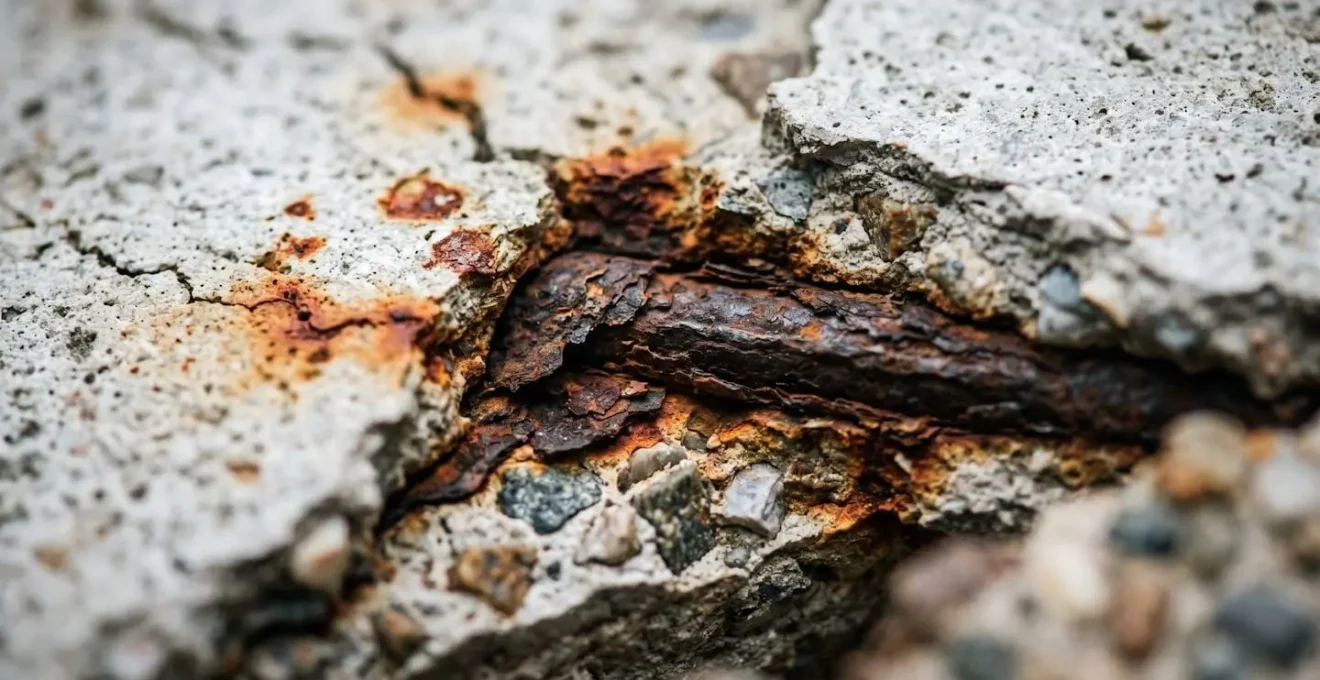
The image above illustrates the end-stage of this process: concrete spalling. By the time you see these rust-stained cracks and exposed rebar, the structural integrity may already be significantly compromised. The mistake is assuming a structure is safe simply because it looks intact on the surface. For anyone managing or owning coastal assets, regular, specialist inspections that go beyond a simple visual check are essential. Techniques like measuring the chloride content at different depths within the concrete can provide an early warning, allowing for preventative treatments before the internal expansion forces cause irreversible damage.
Properly specifying materials for new builds—using higher-grade concrete, corrosion-resistant rebar, or increasing the thickness of the concrete cover over the steel—is the only way to engineer long-term resilience against this pervasive threat. For existing structures, it is a constant battle of monitoring and maintenance.
Key Takeaways
- Coastal resilience is an active process, not a passive waiting game for government action.
- Financial tipping points (insurance, mortgageability) will impact property value long before physical threats become critical.
- A combination of low-cost home retrofits, clear-eyed market analysis, and nature-based solutions forms a powerful, multi-layered adaptation strategy.
How to Accelerate Peatland Recovery Using Local Genetic Strains?
When we think of coastal defence, we instinctively picture concrete and rock. Yet, some of the most effective and resilient solutions are found in the natural world. “Living shorelines” and restored ecosystems can provide a dynamic, self-repairing alternative to static, hard defences. The recovery and engineering of coastal peatlands and saltmarshes represent a frontier in bio-adaptation, a way to work with nature to protect the more than 1.8 million people in the UK at risk from coastal flooding.
Coastal peatlands, like those found in the Norfolk Broads, are natural super-sponges. They absorb vast quantities of rainfall and can buffer the impact of storm surges, releasing the water slowly and reducing peak flood levels. Decades of drainage for agriculture have degraded many of these crucial habitats, but pioneering restoration projects are showing how we can reverse this damage with remarkable success, provided we take a genetically informed approach.
The key to success lies in understanding that not all plants are created equal. The Norfolk Broads Coastal Peatland Restoration project provides a compelling case study. Early restoration efforts often used generic strains of sphagnum moss or saltmarsh grasses sourced from commercial suppliers. Success rates were often low. The breakthrough came when ecologists began to use local genetic strains of these key plants—species that had evolved over centuries to thrive in the specific water chemistry, salinity, and microclimate of that exact location.
By cultivating and reintroducing these locally-adapted strains, the restoration success rate has increased dramatically. These plants are not just surviving; they are thriving, creating a robust, self-sustaining ecosystem. This living system is not static like a concrete wall. It adapts over time, trapping sediment, growing in elevation to match sea-level rise, and becoming more effective as a flood defence as it matures. This is resilience engineering in its most organic form, creating a biological buffer that protects communities while also enhancing biodiversity and sequestering carbon.
How to Monitor Ecosystem Dynamics in British National Parks?
If we are to rely more on natural defences and manage complex processes like managed realignment, we need a far more dynamic and detailed understanding of how our coastlines are changing. The old method of occasional surveys is no longer sufficient to manage the rapid shifts brought by climate change. Fortunately, a new wave of technology is giving us the tools to monitor ecosystem dynamics with unprecedented precision, turning our National Parks and coastlines into real-time, data-rich environments.
This high-tech monitoring is the essential nervous system of modern coastal management. It allows us to move from reacting to disasters to anticipating and mitigating risks. For example, deploying drones equipped with LiDAR (Light Detection and Ranging) after a major storm allows for the creation of centimetre-resolution 3D maps, precisely quantifying beach loss or cliff erosion and allowing for targeted, rapid response. This data is invaluable for validating and refining our risk models.
We can now also monitor what is happening beneath the water’s surface. By taking water samples and analysing the environmental DNA (eDNA) within them—the tiny traces of genetic material left behind by organisms—we can get a comprehensive snapshot of marine biodiversity and detect the arrival of invasive species or shifts in fish populations. This gives us a powerful early-warning system for the health of our coastal ecosystems. The UK government is beginning to invest in these approaches, with the Environment Agency announcing a £30 million investment from 2026-2029 into coastal adaptation pilots, many of which will rely on this next-generation monitoring.
This new toolkit for coastal monitoring combines remote sensing, AI, and even citizen science to create a holistic view of a changing landscape:
- Drone-based LiDAR: To create centimetre-resolution maps of cliff erosion and beach loss after storm events.
- Environmental DNA (eDNA): Water sampling to monitor shifts in marine and estuarine biodiversity.
- AI and Satellite InSAR: Using machine learning to analyse satellite imagery for landslide risk prediction on coastal cliffs.
- Citizen Science 2.0: Mobile apps allowing residents to upload geotagged photos of cliff falls, feeding into real-time coastal risk maps.
The challenges facing our coastal communities are immense, but a retreat into fatalism is the one luxury we cannot afford. The path forward requires a combination of engineering ingenuity, financial realism, and ecological wisdom. By understanding the tipping points and embracing a proactive, multi-layered approach to resilience, we can navigate the changes ahead. The next, most critical step is to move from awareness to action. Assess your specific risks, engage with your local council’s adaptation plans, and begin implementing a personal resilience strategy today.