Research & Innovations
Research and innovation form the backbone of scientific and technological progress, transforming theoretical understanding into practical solutions that reshape industries and improve lives. From the atomic-scale manipulation of materials to the commercialization of breakthrough therapies, the journey from laboratory bench to real-world application requires a complex interplay of scientific discovery, engineering precision, and strategic implementation.
This landscape spans multiple disciplines—each with its own methodologies, challenges, and opportunities. Understanding how these fields interconnect, what drives breakthrough discoveries, and how innovations successfully transition from concept to deployment provides essential context for anyone seeking to grasp the forces shaping our technological future. Whether you’re a student exploring career paths, a professional navigating industry changes, or simply curious about how science advances, this comprehensive overview illuminates the key domains where research meets innovation.
Advanced Materials and Manufacturing Breakthroughs
The manipulation of matter at increasingly smaller scales has revolutionized manufacturing capabilities and material performance. Modern research in this domain focuses on understanding and controlling material properties with unprecedented precision, enabling applications that were theoretically impossible just decades ago.
Atomic-Level Precision and Analysis
The ability to visualize and manipulate materials at the atomic level has fundamentally changed materials science. Techniques like Scanning Electron Microscopy (SEM) and Transmission Electron Microscopy (TEM) allow researchers to examine structures at resolutions measured in nanometers, revealing defects, grain boundaries, and compositional variations invisible to conventional analysis.
This precision extends beyond observation into fabrication. Atomic manufacturing—the layer-by-layer construction of materials with atomic precision—promises to replace certain traditional manufacturing methods by offering perfect structural control. While still emerging from research laboratories, this approach could revolutionize semiconductor production, pharmaceutical development, and specialty alloy creation by eliminating the inherent variability of bulk manufacturing processes.
Energy Efficiency and Thermodynamics in Practice
Thermodynamic principles govern everything from industrial processes to building performance, yet their practical application often reveals unexpected challenges. Research into waste heat recovery systems demonstrates how capturing and repurposing thermal energy can reduce operational costs by substantial margins—some industrial applications report efficiency gains approaching twenty percent.
Similarly, innovations in insulation technology and materials engineering address persistent problems in existing infrastructure. The thermodynamic performance of older buildings, for instance, often suffers from installation errors or material degradation that renders theoretical calculations meaningless. Current research focuses on materials that maintain performance over decades and installation methods that eliminate common failure modes like thermal bridging and moisture accumulation.
Life Sciences and Biotechnology Advances
Biological systems operate through intricate molecular interactions that researchers are only beginning to fully comprehend and harness. Recent innovations enable unprecedented visibility into cellular processes and increasingly targeted interventions.
Cellular and Molecular Innovation
Real-time visualization of cell signaling pathways represents a significant leap forward in biological research. Traditional methods required destroying cells to examine their internal states—a limitation akin to understanding traffic patterns by taking photographs of parked cars. Modern fluorescent markers and advanced microscopy techniques now allow scientists to observe molecular messages as they propagate through living cells, revealing dynamic processes that static analysis could never capture.
This observational capability translates directly into therapeutic applications. Targeted cellular receptor therapy exploits detailed knowledge of cell surface proteins to deliver treatments specifically to diseased cells while sparing healthy tissue. In cancer treatment, this precision dramatically reduces the systemic side effects associated with conventional chemotherapy, which affects all rapidly dividing cells regardless of whether they’re malignant or healthy.
Environmental Restoration Technologies
Biotechnology extends beyond human health into ecological restoration. Peatland recovery initiatives, for example, increasingly utilize local genetic strains of native plants rather than generic commercial varieties. This approach recognizes that populations adapt to specific environmental conditions over generations—local genetics often carry resilience to regional climate patterns, soil chemistry, and pathogen profiles that imported strains lack.
These restoration efforts represent applied ecology informed by molecular biology, demonstrating how fundamental research in genetics and plant physiology enables more effective environmental management.
Turning Research into Reality: The Innovation Pipeline
Scientific discoveries become valuable innovations only when successfully translated into practical applications. This transition from laboratory to market involves distinct challenges that require skills beyond pure research expertise.
Prototyping and Product Development
Creating a minimum viable product (MVP) requires balancing speed, cost, and functionality. Rapid prototyping technologies like 3D printing and CNC machining offer different advantages: additive manufacturing excels at complex geometries and rapid iteration, while subtractive methods provide superior material properties and surface finishes for certain applications.
A common pitfall in prototype development is feature creep—the gradual addition of capabilities beyond the core value proposition. This seemingly minor issue can delay product launches by months as each additional feature requires design, implementation, testing, and refinement. Successful innovation teams maintain disciplined focus on essential functionality, deferring enhancements until after validating fundamental market fit.
Gathering honest feedback presents another challenge, particularly when confidentiality concerns discourage open sharing. Strategies for obtaining meaningful user input without comprehensive non-disclosure agreements include:
- Demonstrating functionality without revealing proprietary implementation details
- Testing with users who lack the expertise to reverse-engineer technical approaches
- Focusing feedback sessions on user experience rather than technical mechanisms
- Utilizing provisional patent protection to establish priority before broader disclosure
Intellectual Property and Timing
Patent strategy significantly impacts innovation success, yet many inventors misunderstand optimal timing. Filing too early—before fully developing an invention—can actually harm commercialization prospects by disclosing partial solutions that competitors can work around while the patent owner struggles with remaining technical challenges.
The decision to invest in disruptive technologies involves similar timing considerations. Being first to market provides advantages in brand recognition and market share, but also exposes innovators to maximum technical risk and development costs. Being smart—entering after initial concepts are proven but before markets mature—often provides better risk-adjusted returns, though it requires accurate assessment of technology maturity and market readiness.
Digital Infrastructure as an Innovation Enabler
Advanced research increasingly depends on robust digital connectivity. High-speed data infrastructure enables distributed research teams, cloud-based computational analysis, and remote instrument operation that would be impossible with legacy networks.
However, infrastructure deployment remains uneven. Rural communities often lack access to gigabit connectivity, creating a digital divide that limits research institution location options and restricts opportunities for geographically distributed collaboration. Government subsidy programs aim to address these gaps, though implementation timelines and eligibility criteria vary significantly by region.
Community broadband initiatives represent an alternative approach where traditional providers decline to invest. These locally organized networks require technical expertise, capital investment, and regulatory navigation, but can deliver connectivity that catalyzes local innovation ecosystems when commercial deployment proves economically unviable.
Aerospace and Next-Generation Mobility
Aviation stands at a technological crossroads as the industry confronts environmental pressures and explores radical new propulsion systems. Hydrogen and electric propulsion each offer distinct advantages and face different technical barriers.
Electric systems provide proven technology and simpler integration, but battery energy density limits range and payload for all but the shortest flights. Hydrogen offers superior energy density but requires entirely new fuel infrastructure and presents safety challenges that demand careful engineering—retrofitting existing airports for hydrogen operations involves addressing everything from storage tank placement to leak detection systems.
Regulatory complexity compounds technical challenges. Certification requirements ensure safety but can create significant barriers for innovative designs, particularly when regulatory frameworks diverge between jurisdictions. Aerospace manufacturers exporting products often face duplicative testing and documentation requirements that increase costs and delay market entry.
Green Innovation and the Energy Transition
The shift toward sustainable energy systems drives substantial research investment and entrepreneurial activity. Tidal energy exemplifies location-specific innovation—coastal regions with significant tidal ranges possess natural advantages that make certain technologies viable there while remaining impractical elsewhere. Scotland’s extensive coastline and powerful tidal currents, for instance, provide ideal conditions for marine energy research and deployment.
Investment decisions in this sector increasingly distinguish between hydrogen storage and carbon capture approaches. Hydrogen enables energy storage and transport while producing only water vapor when consumed, but requires energy-intensive production processes. Carbon capture addresses emissions from existing infrastructure but involves ongoing operational costs and geological storage challenges. Both technologies attract significant funding, though for different strategic reasons and timescales.
Sustainability claims require scrutiny. Greenwashing—the practice of exaggerating environmental benefits—appears frequently in investment pitches and marketing materials. Critical evaluation focuses on quantifiable metrics, third-party verification, and lifecycle analysis rather than general environmental imagery or vague sustainability commitments.
Policy frameworks ultimately determine which innovations achieve widespread deployment. Regulatory changes affecting permitted installation locations, subsidy structures, or grid connection requirements can rapidly alter project economics—offshore wind developments, for instance, remain highly sensitive to planning policy and government support mechanisms.
Research and innovation represent an ongoing process rather than a destination. The fields described here will continue evolving as new discoveries enable novel applications and emerging challenges demand creative solutions. Understanding the current landscape provides a foundation for engaging with these developments—whether as a researcher contributing new knowledge, an entrepreneur commercializing discoveries, or an informed citizen navigating an increasingly technology-dependent world.

Why Investors Are Flocking to Green Innovation Startups in Scotland?
Investing in Scottish green-tech isn’t about finding just any startup; it’s about spotting the specific policy, technical, and financial signals that predict a winner. True value is revealed by metrics like Lifecycle Carbon Intensity (LCI), not just vague ESG claims….
Read more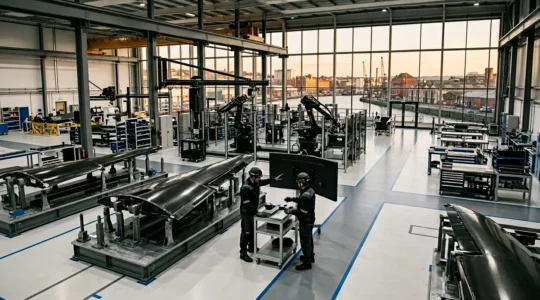
How Has Brexit Impacted Aerospace Manufacturing in Bristol?
The political debate is over; for Bristol’s aerospace sector, Brexit is now a series of operational friction points that must be managed, not debated. Dual certification (EASA & CAA) and customs declarations have created a mountain of non-value-added, duplicated paperwork….
Read more
Hydrogen vs Electric: Which Next-Gen Propulsion Will Rule UK Skies?
The debate over hydrogen versus electric for UK aviation is a distraction; the real battle is being fought at the atomic level against the laws of physics. Batteries lack the fundamental energy density for long-haul flight, a materials-based limitation that…
Read more
Why 5G Digital Infrastructure Is Failing Rural UK Communities
The promise of gigabit Britain for rural communities is not just delayed; it is being actively undermined by market failures and flawed policy. The physics of 5G, particularly its vulnerability to weather, makes it an inherently unreliable solution for vast…
Read more
From Lab to Market: How to Commercialise Innovative Prototypes in London?
The key to commercialising your prototype in London isn’t having a perfect business plan; it’s surgically avoiding the common, high-stakes mistakes that kill 90% of academic ventures before they even start. Filing a patent too early can trap your product,…
Read more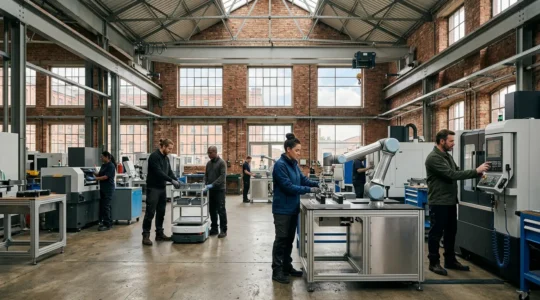
How Disruptive Technology Is Reshaping the Northern Powerhouse Economy
Disruptive technology isn’t replacing Northern industry; it’s forging a stronger, more valuable version by amplifying our core strengths. Job roles are evolving towards higher-skilled, better-paid positions, directly countering fears of mass unemployment in manufacturing. A pragmatic, Northern-centric approach to AI…
Read more