Fundamental Sciences
Every technological breakthrough, medical advancement, and environmental solution begins with fundamental sciences. These disciplines—physics, chemistry, and biology—form the bedrock of our understanding of the natural world. They answer profound questions: Why does matter behave the way it does? How do living organisms function at the cellular level? What principles govern energy transfer and transformation?
Far from being purely academic pursuits, fundamental sciences drive practical innovation across industries. From developing lighter batteries for aviation to creating heat pumps that challenge conventional thermodynamic expectations, from preventing industrial accidents through precise chemical analysis to pioneering cancer treatments based on cellular interactions, these fields translate abstract principles into tangible solutions that shape modern life.
This comprehensive exploration examines how physics, chemistry, and biology interconnect and apply to real-world challenges. Whether you’re a student considering a scientific career, a professional seeking to understand the principles underlying your industry, or simply curious about how the world works at its most fundamental level, this resource provides the foundational knowledge you need.
Physics: The Foundation of Modern Engineering
Physics provides the mathematical framework for understanding how the universe operates, from subatomic particles to galaxies. More importantly for practical applications, physics principles directly translate into engineering solutions that define contemporary technology and infrastructure.
Bridging Theory and Professional Practice
The transition from physics education to engineering careers reveals an interesting gap. While physics graduates possess strong analytical skills and theoretical knowledge, many lack hands-on experience with computational modeling tools and industry-standard software that engineering roles demand. Think of it like learning music theory without ever touching an instrument—the knowledge exists, but practical application requires different skills.
Successful professionals bridge this divide by developing competencies in finite element analysis, CAD systems, and programming languages like Python or MATLAB. These tools transform abstract equations into designs for bridges, aircraft components, and electronic devices.
Wave Propagation and Communication Technologies
Understanding how electromagnetic waves interact with physical environments directly impacts telecommunications infrastructure. Hills, rainfall, and atmospheric conditions don’t just slightly affect 5G signals—they can dramatically attenuate them because higher frequencies (above 24 GHz) experience greater path loss and absorption by water molecules.
This physical reality requires network engineers to deploy more base stations in varied terrain and design systems accounting for weather variability. The physics of wave diffraction, reflection, and absorption determines where you can reliably stream video on your mobile device.
Thermodynamics and Energy Systems
Thermodynamic principles govern all energy transformations, from internal combustion engines to refrigeration systems. Recent applications in sustainable energy demonstrate how deeply understanding these laws enables innovative solutions to environmental challenges.
Heat pumps exemplify this innovation. Rather than generating heat through combustion, they transfer thermal energy from cooler to warmer spaces—seemingly defying intuition. The second law of thermodynamics still applies, but by inputting work (electricity), heat pumps can move three to four units of heat energy for every unit of electrical energy consumed. This apparent efficiency ratio above 100% only seems paradoxical until you recognize they’re moving existing heat, not creating it from fuel.
Comparing gas boilers to heat pumps on thermodynamic efficiency reveals why the latter increasingly dominates green energy strategies. Gas boilers combust fuel at roughly 85-95% efficiency, converting chemical energy to heat. Heat pumps achieve coefficient of performance (COP) values of 3-4, meaning they deliver 300-400% of the energy they consume as useful heat. The thermodynamic advantage becomes clear when you track total energy flow through each system.
This principle extends beyond residential heating to industrial processes, refrigeration, and any application requiring controlled heat transfer. Mastering thermodynamic cycles—Carnot, Rankine, refrigeration—provides the foundation for designing more efficient energy systems across all sectors.
Chemistry: Molecular Analysis and Industrial Applications
Chemistry examines matter at the molecular and atomic level, revealing how substances interact, transform, and can be manipulated for specific purposes. In industrial contexts, this knowledge becomes essential for both quality control and safety management.
Analytical Techniques for Quality and Safety
Two primary analytical methods dominate industrial laboratories: spectroscopy and chromatography. Spectroscopy measures how substances absorb or emit electromagnetic radiation, providing rapid identification of chemical composition. Chromatography separates mixtures into individual components, allowing precise quantification.
For rapid quality control, spectroscopy often wins because it can analyze samples in seconds without extensive preparation. Infrared spectroscopy can verify raw material composition as deliveries arrive. However, when you need to detect trace contaminants or separate complex mixtures, chromatography provides superior resolution despite requiring more time.
Chemical Balance and Industrial Safety
Minor chemical imbalances can cascade into major safety breaches because industrial processes often operate near critical thresholds. Consider a polymerization reactor: a 2% deviation in monomer ratio might trigger runaway exothermic reactions, rapidly escalating temperature and pressure beyond safe limits.
Preventing such incidents requires continuous monitoring through sensors and analytical equipment, plus deep understanding of reaction kinetics and thermodynamics. Chemical analysis doesn’t just verify product specifications—it provides the real-time data needed to maintain processes within safe operating windows.
Optimizing Molecular Conditions for Yield
Small adjustments to reaction conditions—temperature, pressure, pH, catalyst concentration—can substantially impact product yield. Increasing reaction temperature by 10°C might accelerate the desired reaction but also promote unwanted side reactions. Adjusting catalyst loading by a few percentage points can shift selectivity toward target products.
Achieving a 15% yield improvement often requires systematic experimentation mapping how multiple variables interact. This optimization process combines theoretical understanding of reaction mechanisms with empirical testing, demonstrating why chemistry remains as much art as science despite increasingly sophisticated models.
Biology: From Cells to Ecosystems
Biology spans an extraordinary range of scales, from molecular interactions within single cells to complex dynamics of entire ecosystems. Understanding both levels proves essential for addressing contemporary challenges in medicine, conservation, and environmental management.
Cellular Interactions and Medical Research
Cells constantly communicate through chemical signals, physical contacts, and electrical impulses. These cellular interactions regulate everything from embryonic development to immune responses. When these communication networks malfunction, diseases like cancer can emerge.
Cancer immunotherapy exemplifies how understanding cellular interactions enables breakthrough treatments. Checkpoint inhibitor drugs work by blocking negative regulatory signals that cancer cells exploit to evade immune destruction. Normally, checkpoint proteins prevent immune cells from attacking healthy tissue. Tumors hijack this system by expressing checkpoint ligands that tell immune cells “don’t attack me.” Blocking these inhibitory signals unleashes the immune system against cancer.
The distinction between apoptosis (programmed cell death) and necrosis (traumatic cell death) matters critically for drug toxicity assessment. Apoptosis proceeds through controlled pathways that safely dismantle cells without releasing inflammatory contents. Necrosis ruptures cell membranes, spilling contents that trigger inflammation and tissue damage. A drug causing widespread necrosis poses far greater safety concerns than one inducing apoptosis.
Ecosystem Dynamics and Conservation
Ecosystems function as interconnected networks where species, climate, soil chemistry, and disturbance regimes all interact. Monitoring these dynamics requires systematic sampling that captures spatial and temporal variation without introducing bias.
Sampling methodology mistakes can severely skew ecosystem health reports. If you only sample along accessible trails, you miss what’s happening in less disturbed areas. If you sample during one season, you might mischaracterize species that migrate or alter behavior seasonally. Representative sampling requires stratified random designs that account for habitat heterogeneity.
Genetic diversity within populations provides resilience against diseases and environmental changes. Tree diseases like ash dieback devastate populations precisely because many ash stands have low genetic diversity—when the pathogen encounters susceptible genotypes, it spreads rapidly through genetically similar individuals. Populations with higher genetic variation contain some individuals with resistance genes, allowing the species to persist even as susceptible trees die.
Materials Science: Where Atomic Structure Meets Performance
Materials science sits at the intersection of physics, chemistry, and engineering, examining how atomic and molecular arrangements determine material properties. This connection between microscopic structure and macroscopic behavior enables designing materials with specific characteristics.
Graphene’s extraordinary strength relative to its weight stems directly from its atomic structure: a single layer of carbon atoms arranged in a hexagonal lattice with exceptionally strong covalent bonds. Each carbon atom bonds to three neighbors, creating a two-dimensional network that distributes force efficiently. This structure makes graphene roughly 200 times stronger than steel at a fraction of the weight, opening possibilities for lightweight composites in aerospace and automotive applications.
Conversely, atomic-scale defects can catastrophically weaken materials. In aerospace alloys operating under cyclic stress at high temperatures, a single missing atom or misplaced impurity can nucleate a crack. These microscopic flaws concentrate stress, and under repeated loading, cracks propagate until sudden failure occurs. Understanding defect formation and detection enables quality control measures that prevent catastrophic failures.
Construction materials demonstrate how microstructure evolves over time. Concrete from older structures often contains micro-cracks from thermal cycling, chemical attack, and mechanical stress accumulated over decades. Salt air accelerates this degradation in coastal structures because chloride ions penetrate concrete, corroding reinforcing steel. The resulting rust occupies more volume than the original steel, creating internal pressure that spalls concrete from within. Analyzing these microscopic structures reveals degradation before visible damage appears, enabling preventive maintenance.
The Practice of Scientific Research
Beyond understanding scientific principles, contributing to fundamental sciences requires mastering research methodology, scientific communication, and navigating academic career structures.
Research proposals that win funding on the first attempt share common characteristics: they address well-defined questions with clear significance, propose rigorous methodology with appropriate controls, and demonstrate feasibility given available resources and timeline. The narrative must convince reviewers that you understand the field, have identified a genuine gap in knowledge, and possess the skills to fill that gap. Preliminary data showing your approach works strengthens proposals considerably.
Academic career progression increasingly emphasizes quantifiable metrics, particularly the h-index, which measures both productivity (number of publications) and impact (citations received). A researcher with an h-index of 20 has published at least 20 papers that have each been cited at least 20 times. While imperfect, this metric provides a standardized comparison across institutions that university league tables—which reflect overall reputation rather than individual achievement—cannot capture. Understanding how these metrics function helps early-career researchers make strategic decisions about publication venues and collaboration opportunities.
Scientific research demands not just curiosity and analytical skills, but also persistence, meticulous documentation, and the ability to communicate complex findings clearly. These practical competencies, combined with deep understanding of fundamental principles, enable researchers to push the boundaries of human knowledge.
Fundamental sciences form an interconnected foundation supporting technological innovation, medical breakthroughs, and environmental solutions. Physics reveals the universal laws governing matter and energy. Chemistry examines how substances interact and transform. Biology explores living systems from molecules to ecosystems. Together, these disciplines provide the frameworks and tools for understanding and shaping the world around us. Whether applied to developing more efficient energy systems, creating stronger materials, preventing industrial accidents, or treating diseases, fundamental scientific principles remain essential for addressing contemporary challenges and imagining future possibilities.

How Analyzing Microscopic Structures Improves UK Construction Materials?
The structural integrity of UK buildings and infrastructure is not determined by blueprints alone, but by the invisible world of microscopic material properties. Minor oversights in material specification and handling can introduce catastrophic weaknesses, such as cracks and chemical instabilities,…
Read more
Why Understanding Cellular Interactions Is Key to UK Cancer Research?
Mastering cellular interactions is no longer just an academic exercise; it is the core competency for a successful cancer research career within the unique UK ecosystem. Scientific breakthroughs are now driven by manipulating cellular dialogues, from immunotherapy to targeted drug…
Read more
How to Monitor Ecosystem Dynamics in British National Parks?
In summary: Traditional ecosystem monitoring (visual counts, trapping) is no longer sufficient to tackle modern conservation challenges like disease and climate change. Genetic tools, particularly environmental DNA (eDNA), provide a faster, cheaper, and more comprehensive picture of ecosystem health, from…
Read more
How Atomic Structure Analysis Defines UK Nanotech’s Commercial Future
The commercial viability of UK nanotech hinges not on achieving atomic perfection, but on the strategic control and economic scaling of useful imperfections. Theoretical material strength is often irrelevant; real-world performance is dictated by the management of atomic-scale defects like…
Read more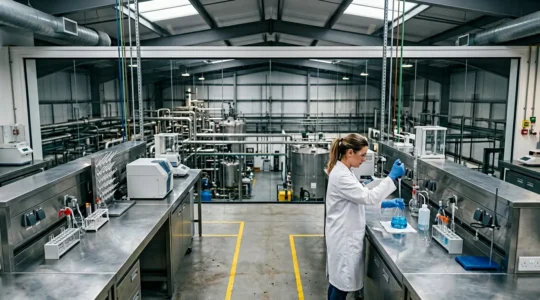
How Chemical Analysis Prevents Industrial Accidents in UK Factories?
Compliance is not a checkbox; it is a continuous, evidence-based process of analytical vigilance that forms your only true defence against major industrial incidents. Minor, undetected chemical deviations are the primary precursors to catastrophic system failures, especially in aging infrastructure….
Read more
Why Understanding Thermodynamics Is the Key to the UK’s Green Energy Success
The UK’s net-zero success hinges less on policy targets and more on applying fundamental thermodynamic laws at the point of use. The ‘quality’ of heat and system flow temperatures are more critical indicators of performance than simple efficiency ratings. A…
Read more
How Physics Principles Shape Modern Engineering Careers in the UK
The greatest barrier for physics graduates entering engineering isn’t a lack of technical skill, but a failure to translate their unique first-principles thinking into the commercial language of industry. Your ability to deconstruct problems to fundamental laws is in high…
Read more