The key to commercialising your prototype in London isn’t having a perfect business plan; it’s surgically avoiding the common, high-stakes mistakes that kill 90% of academic ventures before they even start.
- Filing a patent too early can trap your product, while pitching complex tech to non-technical investors requires storytelling, not data sheets.
- Success depends on tactical discipline—like choosing the right prototyping method for speed and ruthlessly cutting features—not just a brilliant idea.
Recommendation: Instead of hiding your idea behind NDAs, leverage London’s sector-specific angel networks to get the expert feedback that actually moves your project forward.
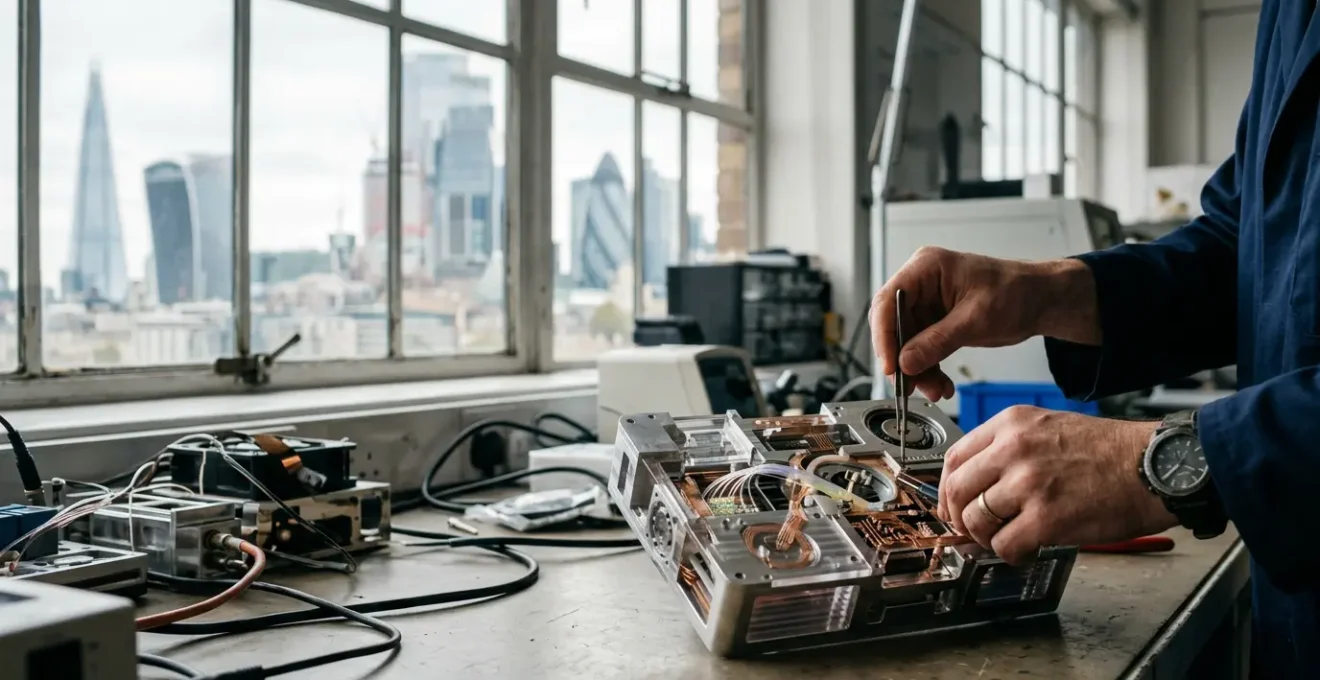
You’re in a London university lab, looking at a prototype that could genuinely change things. It’s a moment of pure academic triumph. Now comes the hard part: turning that brilliant concept into a commercial reality. The default advice is predictable: write a business plan, protect your IP, find funding. While not wrong, this textbook approach misses the brutal, fast-paced reality of the London startup scene. It ignores the specific, tactical errors that I see sink promising ventures every single week.
Too many founders believe the strength of their technology is enough. They stumble into investor meetings armed with data, only to be met with blank stares. They burn cash on premature patent filings or get bogged down in “feature creep,” delaying their launch by months. They operate with a paranoia that stifles the very feedback they need to survive, failing to leverage the unique strengths of the London ecosystem.
This guide is not a business school lecture. It’s a mentor’s field manual. We’re going to bypass the generic platitudes and focus on the deal-killing mistakes. What if the conventional wisdom about patenting first is actually sabotaging your success? How do you translate your complex creation into a story that a non-technical angel investor can’t resist? Forget the grand strategy for a moment. Success in this game is won in the trenches, through disciplined, tactical decisions.
This article will guide you through the critical pressure points of commercialisation. We will dissect the timing of your patent, the art of the pitch, the battle between prototyping methods, and the psychology of getting honest feedback, all within the unique context of London’s vibrant but demanding investment landscape.
Summary: From Lab to Market: How to Commercialise Innovative Prototypes in London?
- Why Filing a Patent Too Early Can Kill Your Prototype’s Success?
- How to Pitch Complex Prototypes to Non-Technical Angel Investors?
- 3D Printing vs CNC Machining: Which Is Best for MVP Speed?
- The Feature Creep Error That Delays Prototypes by Months
- How to Get Honest Feedback on Your Prototype Without NDAs?
- Lab Wonder vs Market Reality: Which Atomic Structures Scale Successfully?
- How to Spot ‘Greenwashing’ in a Pitch Deck in 5 Minutes?
- Why Investors Are Flocking to Green Innovation Startups in Scotland?
Why Filing a Patent Too Early Can Kill Your Prototype’s Success?
The first piece of advice every academic founder gets is “Patent your idea immediately!” This is often deal-killing advice. In the London ecosystem, deal velocity is everything. Filing a full patent too early locks you into a specific version of your invention before you’ve even validated it with the market. If you pivot—and you will pivot—your expensive patent may become worthless. It’s a classic case of putting the cart before the horse, burning precious cash and time.
The smart money in London isn’t just filing fewer patents; it’s filing smarter. A reported 18.6% decrease in London patent applications in 2024 isn’t a sign of waning innovation; it’s a sign of increasing strategic maturity. Founders are learning to use the system to their advantage, favouring provisional applications that secure a filing date and give them a 12-month window to test, iterate, and attract investment before committing to the high costs of a full patent.
Think of your IP strategy not as a single action, but as a multi-stage campaign aligned with your commercial milestones. Your initial goal isn’t a granted patent; it’s maximum flexibility. Use the provisional period to gather data, refine your prototype, and confirm there’s a real market need. This approach turns your IP from a static, expensive shield into a dynamic, strategic asset that evolves with your business. Here’s the timeline you should be working towards:
- File initial application: Secure your filing date with the UK Intellectual Property Office (UKIPO) to establish priority.
- Request early search (optional): This can speed up the process if you need a quick assessment of prior art.
- 12-month window: Use this Provisional Patent Application period to test the market, talk to customers, and pivot your design without invalidating your initial filing.
- Year 4 anniversary: Be aware that the first significant patent renewal fee is due at the fourth-year mark. Budget for these ongoing costs from day one.
- Consider validation strategy: Towards the end of your 12-month window, decide whether to proceed with a full UK patent or expand to European protection based on market feedback, not lab theories.
How to Pitch Complex Prototypes to Non-Technical Angel Investors?
London’s angel scene is on fire. With a reported £2.5 billion deployed into British startups by London angels in 2024, the capital is there. The problem is, most academic founders don’t know how to access it. You walk into a pitch armed with data on material tolerance and processing efficiency, but the investor’s eyes glaze over. They don’t speak your language. Your job isn’t to teach them engineering; it’s to make them feel the opportunity.
The fatal mistake is pitching the ‘how’ instead of the ‘what’ and ‘why’. An angel investor, even a non-technical one, is an expert in risk and return. They aren’t buying your tech; they’re buying a story about a massive problem and your unique ability to solve it. Your prototype isn’t the star of the show; it’s the proof point that your story is credible. You must translate technical features into tangible market benefits: “Our new material doesn’t just have a 50% higher tensile strength; it means aerospace clients can build lighter planes that save millions on fuel.”
This is about mastering investor psychology. You need to build a narrative that is simple, compelling, and emotionally resonant. The prototype demonstration becomes the climax of that story. It’s the moment the abstract promise becomes a tangible reality they can see and touch.

As the image suggests, the most effective pitches are conversations, not lectures. They create a human connection. Research confirms the immense challenge, revealing that almost 90% of angel deals are rejected at the initial screening stage. To be in the 10% that get a second look, you must ditch the technical jargon and lead with the human-centric story of the problem you are solving.
3D Printing vs CNC Machining: Which Is Best for MVP Speed?
In the race from lab to market, your most valuable resource isn’t capital; it’s time. Every day you spend perfecting a prototype is a day a competitor can emerge or the market can shift. This is where the battle of prototyping methods—primarily 3D Printing versus CNC Machining—becomes a critical strategic decision that directly impacts your deal velocity. Choosing the wrong one can mean weeks of delay and thousands in wasted funds.
The choice is not about which technology is “better,” but which is right for your current stage. Early on, when you’re testing form, fit, and basic concepts, speed is king. You need to get a physical object into your hands—and the hands of potential users—as quickly as possible. This is where 3D printing (especially FDM) shines. It’s fast, cheap, and allows for rapid iteration. You can design a part in the morning, print it in the afternoon, and identify its flaws by evening.
However, as you move towards a functional, ‘looks-like, works-like’ Minimum Viable Product (MVP) for investor demos or pilot tests, the requirements change. You need higher precision, better surface finish, and materials that mimic final production. This is CNC machining’s territory. While industry analysis shows CNC machining is approximately 1.5 times slower than 3D printing for a single part, it delivers superior dimensional accuracy and can work with production-grade metals and plastics. It’s the right choice when the “feel” and performance of the prototype are crucial for validation.
The table below breaks down the core trade-offs. Use it not as a rulebook, but as a framework for making a disciplined, stage-appropriate decision. Don’t pay for CNC precision when a quick 3D print will answer your most pressing question.
| Factor | 3D Printing (FDM) | CNC Machining |
|---|---|---|
| Initial Cost (Single Part) | $10-50 (low barrier to entry) | $100-600 (higher setup costs) |
| Turnaround Time | 24 hours for prototypes | 3-7 days (simple parts) |
| Best Volume | Under 10 units | 10+ units (economies of scale) |
| Material Waste | Minimal (additive process) | Higher (subtractive process) |
| Precision | Lower tolerances | Superior dimensional accuracy |
| Ideal Use Case | Form/fit testing, rapid iteration | Functional prototypes, production-like parts |
The Feature Creep Error That Delays Prototypes by Months
There is a silent killer of innovation that haunts every lab and startup garage: feature creep. It starts innocently. “What if we just added a Bluetooth sensor?” “Could the housing also be waterproof?” “My professor suggested it should have data logging.” Each idea seems small and valuable in isolation, but together they form a death by a thousand cuts, bloating your simple, elegant prototype into an unbuildable monster.
This isn’t just a feeling; it’s a documented phenomenon. An eye-opening study by Pendo found that 80% of features in the average software product are rarely or never used. While your prototype is hardware, the principle is identical. Every feature you add introduces complexity, cost, and potential points of failure. It delays your timeline, pushes you further from market feedback, and drains your precious runway. The goal of a prototype is not to be a perfect, all-in-one solution. The goal is to be a question asked to the market: “Do you care about this core problem we are solving?”
Resisting feature creep requires ruthless discipline and a clear framework. It means saying “no” not just to bad ideas, but to good ideas that aren’t essential *right now*. It’s about defining the absolute bare minimum required to test your core hypothesis and sticking to it religiously. Anything else is a distraction that puts your entire venture at risk.

The visual metaphor is clear: complexity is the enemy of speed and clarity. To maintain momentum, you need a system to evaluate every new feature request objectively, separating the essential from the “nice-to-have.”
Your Action Plan: The Anti-Feature Creep Framework
- Anchor to Outcomes: Before any development, define the single, measurable goal of this prototype version. Every proposed feature must directly serve that goal.
- Use Objective Prioritization: Employ tools like an Impact vs. Effort Matrix. Is this new feature high-impact and low-effort? If not, it goes on the “later” list. This removes emotion and politics from the decision.
- Align the Team on the Roadmap: The MVP scope must be crystal clear to everyone involved. A shared understanding of the finish line prevents people from adding detours along the way.
- Establish a Change Request Process: Any request to add a feature must come with a written justification: Why is it needed now? What’s the user value? What’s the cost-benefit? This friction forces deliberate thought.
- Evaluate User Value Relentlessly: The only question that matters is, “Will this make the product easier, clearer, or more useful for our target customer *to solve their primary problem*?”
How to Get Honest Feedback on Your Prototype Without NDAs?
For many academic founders, the Non-Disclosure Agreement (NDA) is a security blanket. The thought of showing your precious prototype to someone without a signed document feels like career suicide. Here’s the hard truth from a mentor who facilitates these conversations daily: professional investors do not sign NDAs for early-stage meetings. Period. Insisting on one is the fastest way to signal that you’re an amateur and get the door slammed in your face.
Why? First, it’s a matter of deal flow. An active angel investor might see hundreds of pitches a year. Tracking and managing hundreds of NDAs is a legal and administrative nightmare. Second, ideas are cheap. They’ve likely seen ten other pitches similar to yours. Their value isn’t in your idea, but in your unique execution, team, and traction. An NDA creates a legal liability for them with zero upside.
This reality is a source of immense anxiety for founders, but it shouldn’t be. You protect yourself not with legal paper, but with strategy. You don’t reveal the “secret sauce” in a first meeting. You show them the cake, let them taste it, and describe how delicious it is; you don’t give them the full recipe. Your goal is to get feedback on the market problem and your proposed solution, not to have them audit your source code or chemical formula.
almost 90% of angel deals are rejected at the initial screening stage
With such a high rejection rate, your priority is to get into the room and learn, not to build a legal fortress. The best way to get honest, valuable feedback safely is to find the right audience. This is where leveraging the London ecosystem comes in. Instead of a scattergun approach, target specialized groups where expertise and reputation create a circle of trust.
Case Study: The Rise of Thematic Angel Groups
According to Jenny Tooth OBE, Executive Chair of the UK Business Angels Association (UKBAA), the UK has seen an explosion of new, highly focused investment groups. As she notes, at least 30 new angel groups have emerged over the past two years, many of which are sector-specific (e.g., FinTech, MedTech, GreenTech) or regionally focused. This is a game-changer for founders. Pitching your MedTech prototype to a group of experienced doctors and healthcare executives is inherently safer. They understand the landscape, respect intellectual property, and provide far more valuable, context-specific feedback than a generalist investor ever could. Their reputation is on the line, which is a more powerful deterrent than any NDA.
Lab Wonder vs Market Reality: Which Atomic Structures Scale Successfully?
Your prototype might be a marvel of material science or a breakthrough in computational chemistry—an “atomic structure” of immense elegance in the lab. But investors and the market ask a different, more brutal question: can it be scaled? The journey from a single, perfect lab-grown sample to a million reliable units is where most deep-tech ventures die. It’s the chasm between a lab wonder and a market reality.
The UK, and London in particular, is a global hub for this kind of deep innovation. As a testament to this, the European Patent Office reports a +28% average annual growth rate in AI-related patent fields since 2019, a domain often underpinning these new structures. This confirms the UK’s powerhouse status in foundational R&D. But a patent is just the beginning. The real challenge is commercial scalability.
Scaling success is less about the theoretical perfection of your structure and more about its “good enough” performance when faced with the messy realities of mass production. Consider these questions:
- Material Sourcing: Can the exotic materials you used in the lab be sourced ethically, reliably, and affordably at 10,000 times the quantity?
- Manufacturing Tolerance: Your lab process is perfect. Can a standard factory in a different country replicate it with 99% reliability? What happens in that 1% of cases?
- Cost of Goods Sold (COGS): What is the path to reducing your per-unit cost by an order of magnitude? If it costs £1000 to make in the lab, you need a clear, credible roadmap to making it for £50.
- Regulatory Hurdles: Does your new atomic structure fall under existing regulations (e.g., medical, food-grade), or are you stepping into a compliance vacuum that could take years to navigate?
Case Study: The UK’s Innovation Engine
In 2023, the United Kingdom solidified its position by ranking 4th among the most innovative economies globally, surpassing nations like Singapore, Germany, and Finland. This isn’t just about a few big companies; the innovation landscape is dynamic, with firms from diverse sectors pushing into advanced physics, AI, and machine learning. This environment proves that the UK has the talent and foundational science. It positions London as a prime location to find the partners—manufacturing experts, supply chain specialists, and regulatory consultants—needed to bridge the gap from lab to market. Your job as a founder is to leverage this ecosystem to de-risk your scaling plan before an investor has to ask you about it.
How to Spot ‘Greenwashing’ in a Pitch Deck in 5 Minutes?
“Green” and “sustainable” are the hottest buzzwords in the London investment scene. This presents a massive opportunity for genuine innovators, but also a significant threat: the noise from “greenwashers.” Investors are becoming increasingly sophisticated and cynical. A pitch deck with a stock photo of a leaf and a vague claim to “help the planet” will be dismissed in seconds. To get funded, you don’t just need to be green; you need to prove it with an undeniable Credibility Stack.
Greenwashing is easy to spot if you know what to look for. It’s characterized by vagueness, a lack of metrics, and an emphasis on marketing over measurable impact. A greenwashing pitch says, “We’re a sustainable alternative.” A credible pitch says, “Our process reduces water consumption by 40% per unit compared to the industry standard, which, when deployed across our target market, equates to saving 50 million litres annually.” One is a wish; the other is an investment case.
As a founder in this space, your job is to build your Credibility Stack before you even write your pitch deck. This means proactively gathering the third-party validations, certifications, and data that make your environmental claims irrefutable. You need to anticipate investor skepticism and answer their unspoken questions before they are even asked. In the competitive London market, this level of preparation is not optional; it’s the price of entry.
Action Plan: Your London Anti-Greenwashing Credibility Stack
- Use Quantifiable Metrics Aligned with London Goals: Don’t just say you’re green. Reference specific data tied to the Mayor of London’s Environment Strategy or UK Net Zero targets. (e.g., “Our solution reduces PM2.5 emissions by 15%, directly supporting London’s 2030 air quality targets.”)
- Seek B Corp Certification: This rigorous, third-party validation of your social and environmental performance is a globally recognised gold standard. Numerous consultants in London specialise in guiding startups through this process.
- Get Technology Validated by the Carbon Trust: Leverage this independent, UK-based organization for a credible, expert assessment of your technology’s environmental impact. Their stamp of approval is a powerful signal to investors.
- Win Innovate UK Sustainability Grants: Actively apply for government-funded, sustainability-focused competitions. Winning one is not just about the cash; it’s a powerful official endorsement of your technology’s potential.
- Demonstrate a Circular Economy Mindset: Go beyond your product’s use. Detail its end-of-life plan, your material sourcing strategy, and how you integrate into a closed-loop system. This demonstrates a deep, systemic understanding that savvy impact investors look for.
Key Takeaways
- Strategic Delay on Patents: Use a provisional patent as a 12-month window to validate your idea; filing a full patent too early kills your flexibility and drains cash.
- Pitch the Story, Not the Science: Non-technical investors buy into a compelling problem-solution narrative, not technical specifications. Your prototype is proof, not the product pitch itself.
- Ruthless Prioritisation Over Perfection: Fight feature creep by defining a minimal viable product (MVP) and using objective frameworks. The goal is market feedback, not a perfect machine.
Why Investors Are Flocking to Green Innovation Startups in Scotland?
It might seem odd to end a guide for London founders by looking at Scotland, but the most valuable lessons often come from unexpected places. On the surface, the data presents a puzzle. The EPO Patent Index 2024 shows that while England’s patent applications grew, Scotland saw a 3.1% decline. And yet, the country has become a magnet for green innovation investment, particularly in sectors like tidal and wind energy. So, what are they doing right, and what’s the takeaway for a founder in London?
The answer is simple but profound: ecosystem cohesion. The success of Scotland’s green tech scene isn’t built on the volume of individual inventions, but on a deliberate, coordinated strategy from the top down. Investors aren’t just backing a single startup; they are backing a startup that is supported by a network.
This provides a powerful final lesson. As a founder, your job is not just to build a great prototype. It’s to build a mini-ecosystem around your prototype. It’s to show an investor that you aren’t an isolated academic with a clever idea, but a savvy operator who knows how to leverage the immense resources at your disposal.
The Scottish Model: Coordinated Support De-Risks Investment
Scotland’s National Innovation Strategy provides the blueprint. Governmental bodies like Scottish Enterprise don’t just offer grants; they create cohesive public-private partnership frameworks. They actively de-risk projects for private investors by providing targeted funding, facilitating access to test sites (like world-leading tidal energy centres), and demonstrating clear policy alignment. When a startup pitches, it does so with the implicit backing of a national strategy. This dramatically changes the risk profile for an investor. London founders can replicate this model at a local level: build a consortium with a London borough council, a university tech transfer office, and a relevant government body like the Carbon Trust. A first commercial contract or pilot project with a local authority is often more valuable to an investor than a dozen patents.
The capital, talent, and opportunity are all here in London. The question is not whether your idea is brilliant, but whether you have the commercial discipline and strategic vision to navigate the path to market. Start by building your credibility stack, telling a compelling story, and leveraging the ecosystem around you, not just the technology within your prototype. Evaluate your project against these principles today and take the first step towards turning your lab wonder into a market reality.